Dye Sublimation vs Screen Printing for Cosplay: Which One Wins?
So you’ve got the perfect suit design ready to go. Now comes the decision that determines how your costume looks on day one, how it feels after eight hours on the con floor, and whether it still looks good a year from now: how does that design actually get onto the fabric?
I’m Mark, the creator behind 4NEO Designs, and every suit pattern I make is built for dye sublimation. But I get asked all the time whether screen printing would work instead, especially by cosplayers who already know screen printing from t-shirts. It’s a fair question, and the honest answer is that each method has its place. Today I’m putting them head to head so you know exactly which one your build needs.
Let’s get started!
What’s the Difference Between Dye Sublimation and Screen Printing?
Dye sublimation uses heat to turn ink into gas so it bonds with polyester fibers, making the design a permanent part of the fabric itself. Screen printing pushes ink through a stencil mesh onto the surface of the fabric, leaving a layer of ink sitting on top. That one difference, in the fabric versus on the fabric, drives almost everything else: durability, stretch, detail, and cost.
For cosplay specifically, the question usually comes down to what you’re making. A logo on a cotton tee? Screen printing is fine. A full-body spandex suit with muscle shading, gradients, and seam-to-seam color? That’s dye sub territory, and I’ll show you why.
How Dye Sublimation Works
Your suit design starts as a flat digital file, with every panel of the suit laid out like a sewing pattern. A sublimation printer prints that file onto transfer paper with special dye-based inks. Then a heat press brings the paper and polyester fabric together at high temperature, the ink turns into gas, and it bonds with the fibers themselves. When the panels come off the press, the design isn’t a coating. It’s literally dyed into the material.
The printed panels then get cut and sewn into the finished suit. Because the ink is part of the fabric, the suit keeps 100% of its stretch, and the colors survive washing, sweating, and stretching without cracking.

How Screen Printing Works
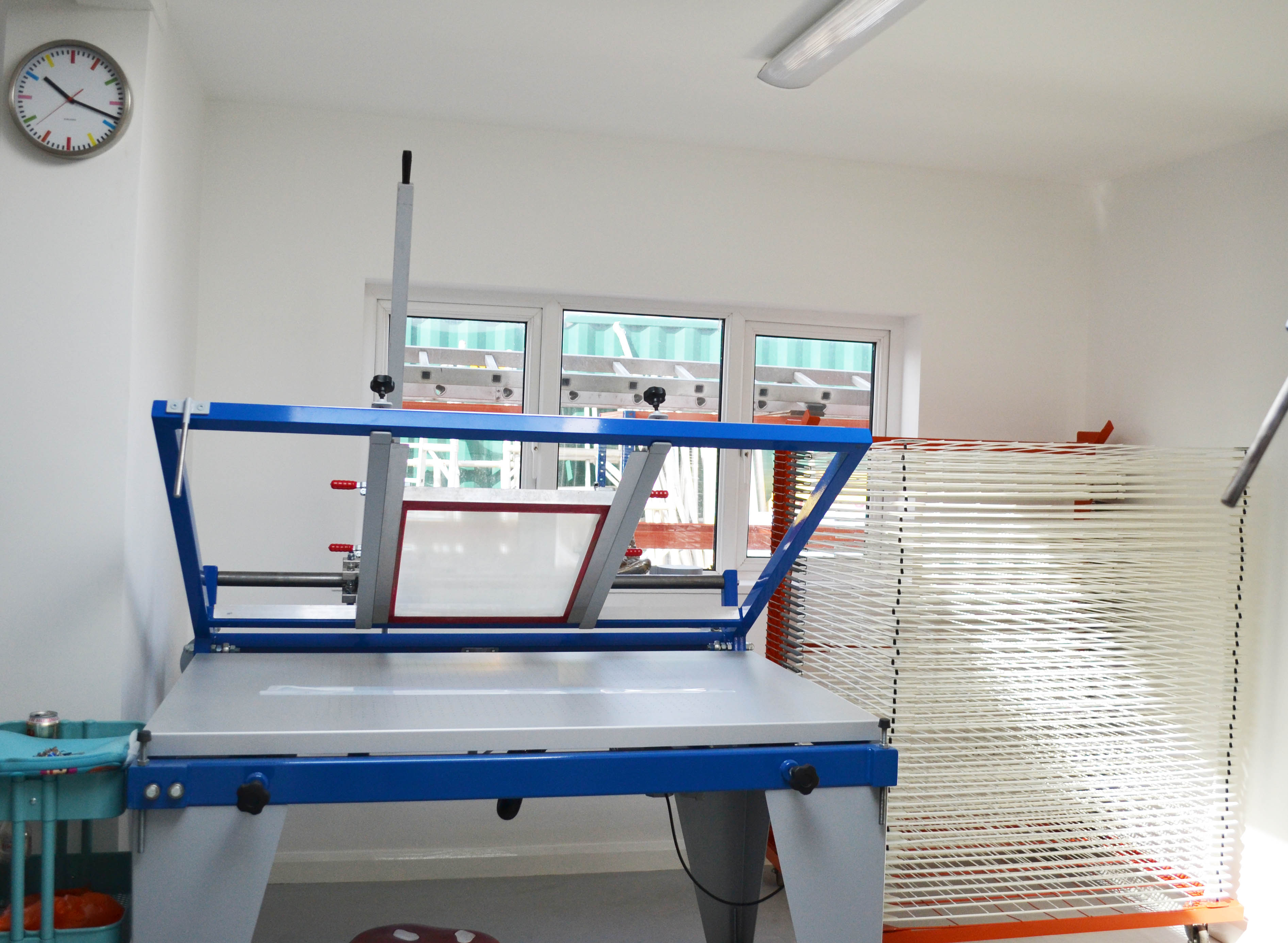
Screen printing is the classic t-shirt method. Each color in your design gets its own stencil screen. Ink is pushed through the screen onto the fabric surface, one color at a time, then cured with heat so it sets. It’s fast and cheap once the screens are made, which is why it dominates merch tables and team uniforms.
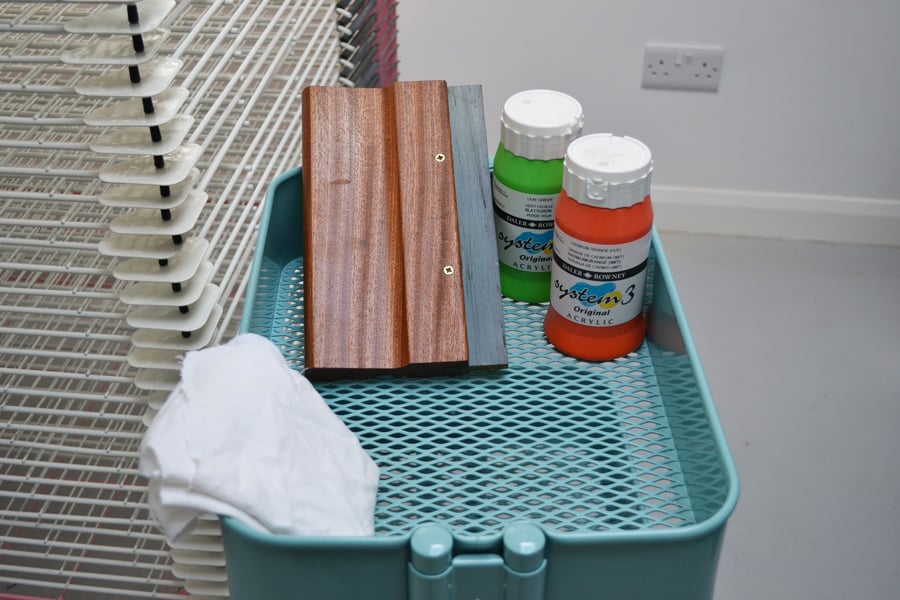
The catch is that every color needs its own screen, gradients have to be faked with dot patterns, and the cured ink forms a layer that sits on top of the fabric. On a stretchy bodysuit, that layer becomes the weak point.
Dye Sublimation vs Screen Printing: 7 Rounds That Decide It
1. Color and Detail
Dye sub prints in full color from a digital file, so photorealistic gradients, soft shadows, and tiny details all come out exactly as designed. There’s no limit on the number of colors and no extra cost for complexity. Screen printing charges you per color, and smooth gradients are out of reach without halftone tricks that look dotted up close. For a suit that depends on subtle muscle shading, this round isn’t close. Dye sub wins.
2. Durability
Screen print ink cracks. Anyone who owns an old band tee has watched it happen. Now imagine that ink layer on a suit that stretches every time you move, sit, or pose. Dye sub ink can’t crack or peel because there’s no layer to crack: the color is inside the fibers. It also won’t fade in the wash. Dye sub wins.
3. Stretch and Comfort
A cosplay bodysuit might stretch 50% or more across the chest and shoulders when worn. Screen print ink doesn’t stretch with it; large printed areas turn stiff, trap heat, and show stress marks where the fabric pulls. Dye sub fabric feels identical to unprinted fabric: same stretch, same breathability, no stiff patches. For eight-hour con days, that matters more than anything. Dye sub wins.
4. All-Over Coverage
Screen printing works best on a flat placement area, like the center of a chest. Printing edge to edge on every panel of a full bodysuit isn’t practical with screens. Dye sub is built for exactly that: every panel is printed corner to corner before sewing, so the design wraps your whole body with no blank zones and no misaligned prints. There is also a supply problem: most screen print shops run small screens sized for chest logos, and finding one that will print full suit panels is genuinely hard. Dye sub shops print full-size panels as their standard job. Dye sub wins.
5. Cost and Turnaround
Here’s where it gets interesting. Screen printing has setup costs per screen, so it only gets cheap when you print hundreds of identical copies. A one-off costume with many colors would cost a fortune in screens. Dye sub has zero setup cost per design, which makes it the affordable option for exactly what cosplayers need: a single custom suit. Round five goes to dye sub for one-offs, and to screen printing only if you’re making fifty matching team shirts. Turnaround follows the same logic: a dye sub shop goes straight from file to printer, while screen printing adds screen prep for every color before a single pass happens. For a custom suit on a con deadline, dye sub is usually days faster and cheaper.
6. Fabric Choice
This is screen printing’s one real win. Dye sub only bonds with polyester-based fabrics, so cotton is off the table. Screen printing works on cotton, canvas, blends, almost anything. If your costume piece is a cotton work shirt or a canvas apron, screen printing (or heat transfer vinyl) is the right call. For spandex bodysuits this doesn’t matter, because performance spandex is polyester-based anyway.
7. Raised Texture
Here’s the round a lot of dye sub fans won’t admit: screen printing can do something dye sub can’t. With puff or high-density ink additives, screen printing produces genuinely raised texture you can feel, which is the closest budget answer to the embossed surfaces on movie suits. Dye sub shading lives inside the fabric: it looks dimensional and photographs beautifully, but it runs flat under your fingers.
The common workaround is hand-applying puff paint on top of a dye sub base, the classic Spider-Man webbing trick. It works, but be honest with yourself about the time: hours for small accents, and weeks or even months for full coverage depending on the suit. If raised texture across the whole suit is non-negotiable and you can find a shop that prints at that scale, screen printing takes this round. For raised accents on top of a printed design, puff paint over a dye sub base is the proven path.
When Screen Printing Is Actually the Right Choice
I’d rather you pick the right tool than just take my word for it, so here’s the honest list. Choose screen printing when:
- The fabric is cotton: a casual character look built from a cotton tee or flannel can’t be sublimated.
- It’s one simple logo: a single-color emblem on a finished garment is quick and cheap to screen print or press with vinyl.
- You need bulk copies: printing matching shirts for your whole cosplay group is where screens earn their setup cost.
- You want raised, touchable texture: puff and high-density inks create embossed effects that flat dye sub printing cannot, if you can find a shop printing at the size you need.
Everything else on a cosplay suit points the other way.
Why Cosplay Suits Are Built for Dye Sub

Think about what a superhero suit actually asks of its printing method: skin-tight stretch, full-body coverage, smooth color gradients, fine texture details, and shading subtle enough to read as real muscle. Every one of those is a dye sub strength and a screen printing weakness.
It’s why every design in my catalog includes a printed muscle base as the foundation layer. That kind of soft, anatomical shading simply cannot be screen printed onto spandex. It has to live inside the fabric. The same goes for woven textures, panel lines, and weathering effects you see on screen-accurate movie suits.
If you’re planning a full build from scratch, my DIY superhero costume guide walks through the whole journey, and the printing method you choose here is the foundation everything else sits on.
How to Get Started With a Dye Sub Suit
You don’t need to own a sublimation printer. Most cosplayers design (or buy) the pattern file, then send it to a print shop that specializes in stretch fabric. Here’s the path I recommend:
- Start with a ready-made design: every pattern in my shop is print-ready for dye sub, with muscle shading already built in.
- Designing your own? Grab my free muscle base template as your foundation layer and build your colors and logos on top.
- Want it fully custom? Commission me and I’ll build the design to your measurements and character, ready to send to the printer.
And if you hit a wall anywhere in the process, from choosing fabric weights to prepping files for print, come ask in the 4NEO Designs Discord. I answer questions there, and the community has printed with shops all over the world.
Conclusion: For Cosplay Suits, Dye Sub Wins
Screen printing is a great tool for the job it was built for: simple designs, cotton garments, bulk runs, and raised texture effects. But a cosplay bodysuit’s core needs run the opposite way, and dye sublimation delivers it: unlimited color, permanent ink that moves with the fabric, and edge-to-edge coverage with shading detailed enough to pass for real anatomy.
Pick the method that matches your build, and if that build is a superhero suit, you already know the answer. Now go make something heroic.
Key Takeaways
- The core difference: dye sublimation bonds ink into polyester fibers; screen printing layers ink on top of the fabric.
- Dye sub wins for cosplay suits: unlimited colors, smooth gradients, full stretch, no cracking, and edge-to-edge panel coverage.
- Screen printing still has a place: cotton fabrics, single simple logos, bulk runs, and raised puff-ink textures.
- One-off costumes favor dye sub on cost: no per-color screen fees means complex designs cost no more than simple ones.
- Muscle shading requires dye sub: soft anatomical gradients can’t be screen printed onto stretch fabric.
Frequently Asked Questions
What is dye sublimation printing for cosplay?
Dye sublimation is a printing method that uses heat to turn ink into gas so it bonds permanently with polyester fabric. For cosplay, the suit design is printed onto every pattern panel before sewing, which allows full-color, edge-to-edge designs with gradients and muscle shading that keep the fabric’s full stretch.
Does dye sublimation crack or fade like screen printing?
No. Screen print ink sits on top of the fabric as a layer, which is why it cracks and peels as the garment stretches and ages. Dye sublimation ink becomes part of the fibers themselves, so there is no layer to crack. The colors survive stretching, sweating, and washing without peeling or fading.
Can you dye sublimate on cotton?
No. Dye sublimation only bonds with polyester and polyester-based blends. Cotton fibers will not hold sublimation ink, so prints wash out and look faded. For cotton garments, use screen printing or heat transfer vinyl instead. Cosplay bodysuits are not affected by this limitation because performance spandex is polyester-based.
Is dye sublimation expensive for a single cosplay suit?
It is usually the cheaper option for a one-off. Screen printing charges setup fees per color screen, which makes a multi-color custom design very expensive in small quantities. Dye sublimation prints from a digital file with no setup cost per design, so a complex full-color suit costs the same to print as a simple one.
Can dye sublimation print muscle shading and gradients?
Yes, and this is its biggest advantage for superhero cosplay. Dye sublimation reproduces smooth photographic gradients, so soft anatomical muscle shading prints exactly as designed. Screen printing cannot produce true gradients on stretch fabric; it approximates them with visible dot patterns.
Can dye sublimation create raised textures like movie suits?
No. Dye sublimation color lives inside the fabric, so the surface stays smooth and flat to the touch. Screen printing with puff or high-density ink additives can create genuinely raised texture, and many cosplayers add raised accents to a dye sub suit by hand with puff paint. Hand-puffing takes hours for small accents and weeks or months for full coverage, so plan your timeline accordingly.